
Choosing a China-based Utility Vehicle supplier requires more than comparing factory prices. Global buyers must assess engineering depth, production consistency, export experience, and after-sales support. OICA reported 93.5 million motor vehicles produced worldwide in 2023, showing the scale and competitiveness of modern vehicle manufacturing. China remains a major production center within this ecosystem, serving agricultural, industrial, logistics, and recreational applications.
Market expectations are also changing quickly. The International Energy Agency’s Global EV Outlook 2024 reported more than 14 million electric car sales in 2023, representing nearly one-fifth of global new-car sales. This transition affects Utility Vehicle sourcing, from battery performance and charging systems to payload capacity and serviceability. A vehicle working on a muddy farm road needs different engineering from one operating inside a warehouse. Details matter.
Supplier evaluation should include factory audits, sample testing, component traceability, warranty procedures, and documented compliance with the destination market’s requirements. Certifications help, but they do not replace physical inspection or field testing. No supplier ranking is perfect. That limitation matters. Product specifications can look impressive on paper, while replacement parts arrive slowly or technical support remains unclear. Reliable buyers therefore compare verified production records, independent test evidence, and real customer feedback. Reports from OICA and the IEA provide useful market context, but procurement decisions still require practical judgment. The strongest Chinese suppliers combine flexible customization, stable quality control, transparent communication, and support that continues after delivery. That is where global value is truly measured.
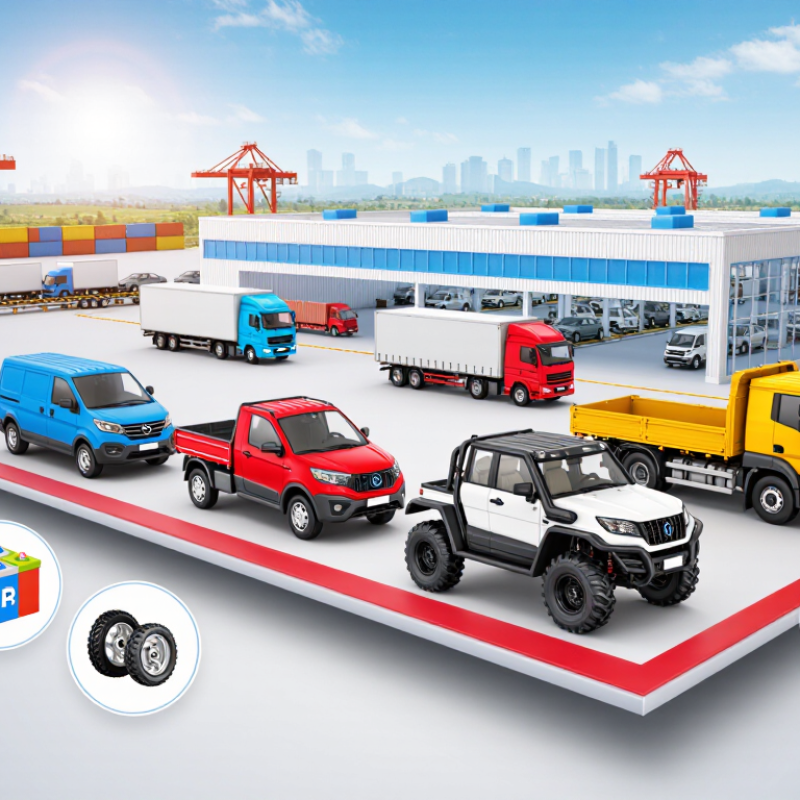
A China-made utility vehicle for international markets is defined by more than low pricing. It must survive local roads, weather, charging systems, and work routines. In 2023, China exported 4.91 million vehicles, including 1.73 million new-energy vehicles, according to the China Association of Automobile Manufacturers. However, these figures cover passenger and commercial vehicles together. Buyers should not treat export volume as proof of utility performance.
A credible supplier provides measurable evidence. The vehicle should show payload, gradeability, ground clearance, turning radius, braking distance, and battery protection data. ISO 16750 testing can assess electrical and environmental durability in road vehicles. For electric models, the IEA reported that global electric car sales exceeded 14 million in 2023, with China representing about 60 percent of sales. This indicates manufacturing scale, but not automatic suitability for every market. A warehouse vehicle needs different calibration from a rural service vehicle.
Look closely at small details. Can a technician replace a damaged lamp quickly? Does the dashboard use the buyer’s language? Are charging connectors, spare parts, and manuals available locally? These questions reveal operational maturity. Certification for the destination market must also be verified independently, not accepted from a sales brochure. The weak point is often after-sales support. A strong factory may still rely on an inexperienced distributor. That risk deserves written service targets, parts inventories, and response times. Perfect claims should invite more questions.
International buyer evaluation matrix based on vehicle classification, homologation, engineering, manufacturing quality, and export readiness.
| Evaluation Dimension | Reference Data or International Benchmark | What a China-Made Utility Vehicle Should Demonstrate | Recommended Verification Documents | Why It Matters to Global Buyers |
|---|---|---|---|---|
| Vehicle Classification | For European markets, N1 generally covers goods vehicles with a maximum mass not exceeding 3.5 tonnes. N2 covers goods vehicles above 3.5 tonnes and not exceeding 12 tonnes. | Correct classification for the intended use, payload, driving licence requirements, taxation, and registration category. | Type-approval certificate, technical data sheet, gross vehicle mass certificate, and destination-market registration guidance. | Incorrect classification can affect import clearance, road legality, insurance, and operating costs. |
| Payload and Towing Capacity | Rated payload is calculated from the certified gross vehicle mass minus the certified kerb mass. Towing limits must be separately approved and are not automatically equal to payload capacity. | Clearly stated payload, axle-load limits, trailer rating, tow-bar rating, and test conditions. | Vehicle mass certificate, axle-load chart, towing approval, owner’s manual, and independent weighing record. | Utility buyers purchase working capacity rather than appearance; overstated payload can create safety and warranty risks. |
| Powertrain Choice | Common international configurations include diesel, gasoline, hybrid, battery-electric, and fuel-cell powertrains. The best option depends on duty cycle, charging or refuelling access, climate, and local energy prices. | Powertrain matched to urban delivery, construction, agriculture, municipal service, or mixed-road operation. | Engine or motor specifications, duty-cycle analysis, energy-consumption test report, and maintenance schedule. | A technically suitable powertrain reduces total cost of ownership and avoids poor real-world performance. |
| Emission Compliance | European combustion vehicles are assessed against applicable Euro emission requirements; vehicles for mainland China are subject to China VI requirements. Other markets may use separate national standards. | Engine calibration, after-treatment system, evaporative-emission control, and diagnostic functions configured for the destination market. | Certificate of conformity, emission test report, regulatory approval number, and fuel-quality requirements. | Emission non-compliance can prevent registration or lead to penalties and restricted urban access. |
| Electric Vehicle Range | WLTP, EPA, and CLTC are different test procedures. Their range figures should not be compared as if they were identical; real range varies with payload, temperature, speed, terrain, and auxiliary loads. | Range data for the exact vehicle version, including usable battery capacity and payload-related range information. | Official test-cycle report, battery capacity specification, energy-consumption data, and cold-weather test results where relevant. | Delivery fleets need route-level range confidence, not only a headline laboratory figure. |
| Charging Compatibility | Type 2 and CCS2 are widely used in Europe and many other markets. J1772 and CCS1 are common in North America. Charging standards vary by destination. | Correct inlet, communication protocol, voltage range, onboard charger rating, and public-charging compatibility. | Charging-interface specification, electrical safety report, charging test record, and installation requirements. | Incompatible charging hardware can make an otherwise capable electric utility vehicle commercially unusable. |
| Battery Safety | UN Regulation No. 100 addresses approval requirements for electric powertrains and rechargeable electrical energy storage systems. GB 38031-2020 specifies safety requirements for power batteries used in electric vehicles in China. | Battery pack protection, thermal propagation control, electrical isolation, crash protection, and high-voltage service procedures. | UN R100 approval where applicable, battery safety test report, ingress-protection test, isolation test, and emergency-response guide. | Battery safety affects regulatory approval, fleet insurance, emergency handling, and long-term customer confidence. |
| Crash and Road Safety | Requirements differ by market. European vehicles may use UNECE regulations and EU whole-vehicle type approval; the United States uses Federal Motor Vehicle Safety Standards. | Destination-specific lighting, braking, restraint, crash, tyre, glazing, pedestrian, and electronic safety equipment. | Type-approval dossier, brake test report, lighting approval, safety-system validation, and vehicle identification records. | A vehicle approved for one region is not automatically legal for another region. |
| Functional Safety | ISO 26262 is the main international reference for functional safety of electrical and electronic systems in road vehicles. It uses Automotive Safety Integrity Levels from QM to ASIL D. | Risk analysis and safety controls for braking, steering, power management, battery systems, and driver-assistance functions. | Safety plan, hazard analysis, validation report, software traceability, and supplier quality records. | Strong functional-safety processes reduce the risk of hazardous electronic or software failures. |
| Cybersecurity and Software Updates | UN Regulations No. 155 and No. 156 address vehicle cybersecurity management and software-update management for applicable UNECE markets. | Secure diagnostics, access control, vulnerability monitoring, update governance, and traceable software release procedures. | Cybersecurity management evidence, software-update policy, penetration-test summary, and incident-response process. | Connected utility fleets increasingly depend on safe telematics, remote diagnostics, and controlled software updates. |
| Electrical and Water Protection | IP ratings are defined by IEC 60529. An IP67 enclosure is dust-tight and protected against temporary immersion under the specified test conditions. | Clearly specified protection level for the battery, high-voltage connectors, control units, and other exposed electrical components. | Ingress-protection test report, connector specification, high-pressure wash test, and post-test insulation measurement. | Construction, agricultural, mining, and municipal vehicles often operate in water, dust, mud, and high-pressure cleaning environments. |
| Manufacturing Quality System | ISO 9001 provides a general quality-management framework. IATF 16949 is an automotive-sector quality-management standard used by many automotive manufacturers and suppliers. | Documented process control, incoming inspection, traceability, corrective action, supplier management, and end-of-line testing. | Current certificates, audit reports, process-control plans, production records, and non-conformity statistics. | A mature quality system is more important than a low purchase price for repeat fleet orders. |
| Configuration and Right- or Left-Hand Drive | Steering position, lighting pattern, mirrors, instrument units, charging location, and road-sign visibility must match the destination market. | Separate left-hand-drive and right-hand-drive configurations where required, with market-specific parts and software settings. | Destination-market build sheet, homologation drawings, sample inspection report, and VIN-level configuration record. | Market-specific configuration prevents registration delays and reduces costly post-arrival modifications. |
| Climate and Terrain Adaptation | Performance can change significantly in high heat, cold weather, high altitude, heavy rain, dust, steep grades, and unpaved conditions. | Cooling capacity, battery thermal management, corrosion protection, suspension tuning, ground clearance, and traction performance matched to the duty cycle. | Hot-weather and cold-weather test results, gradeability test, wading-depth specification, corrosion test data, and tyre approval. | Utility vehicles are often used away from ideal roads and controlled urban environments. |
| After-Sales Service Capability | There is no single worldwide legal service period. Buyers should contractually define parts availability, diagnostic support, repair response, and warranty obligations. | Regional parts stock, trained technicians, diagnostic equipment, service manuals, warranty workflow, and escalation contacts. | Service network map, parts catalogue, spare-parts lead-time commitment, warranty policy, and training plan. | Vehicle uptime directly affects revenue for delivery, rental, construction, and municipal fleets. |
| Warranty and Battery Warranty | Warranty terms are contractual and vary by vehicle, market, mileage, time, and commercial-use conditions. Battery warranties commonly define both time or mileage limits and a minimum retained-capacity condition. | Separate coverage for the complete vehicle, powertrain, high-voltage components, battery, corrosion, and commercial-use operation. | Signed warranty terms, exclusions, claim procedure, battery-capacity measurement method, and transfer conditions. | Clear warranty language protects the buyer from unexpected fleet operating costs. |
| Vehicle Identification and Traceability | A standard vehicle identification number generally contains 17 characters. The VIN, component serial numbers, and production records should be linked. | VIN-level traceability for battery packs, motors, engines, safety components, software versions, and recall campaigns. | VIN decoding record, build certificate, component serial-number list, inspection report, and recall process. | Traceability simplifies registration, maintenance, warranty claims, and safety campaigns. |
| Export Documentation | Typical export documentation includes commercial invoice, packing list, bill of lading, certificate of origin, export declaration, and destination-specific conformity documents. | Consistent vehicle specifications and matching information across the vehicle, invoice, customs documents, and approval records. | Document checklist, sample shipping file, certificate of origin, conformity certificate, and customs classification review. | Accurate documents reduce customs delays, unexpected duties, and registration problems. |
| Operating Cost Transparency | Total cost of ownership includes purchase price, freight, import duties, registration, energy or fuel, tyres, maintenance, downtime, insurance, and residual value. | A cost model based on the buyer’s mileage, payload, energy prices, service intervals, and expected operating life. | Five-year or lifecycle cost model, service schedule, parts pricing, energy-consumption assumptions, and resale-value assumptions. | The lowest initial price does not necessarily produce the lowest fleet cost. |
| Supplier Delivery Reliability | Delivery performance should be measured using confirmed production lead time, on-time shipment rate, defect rate, and issue-resolution time rather than informal promises. | Defined production capacity, capacity-reservation process, quality gates, change-control procedure, and escalation mechanism. | Production schedule, inspection plan, factory-acceptance-test report, service-level agreement, and performance dashboard. | Reliable supply is essential for fleet deployment, public tenders, seasonal work, and replacement planning. |
| Buyer conclusion: A competitive China-made utility vehicle for international markets should combine destination-specific homologation, transparent payload and range data, verified safety systems, reliable quality control, compatible charging or fuel systems, documented after-sales support, and traceable export documentation. A supplier should be selected only after the exact vehicle configuration is tested and approved for the target country. | ||||
Common types include electric carts, low-speed transporters, side-by-side vehicles, compact tractors, and warehouse robots. Each suits different work.
Electric utility carts work well on paved sites. They move quietly and can carry supplies in flexible cargo beds.
Compare payload, climbing ability, battery chemistry, charging time, braking, and spare-parts support. Test real working conditions.
Not always. Wet soil, slopes, and loose gravel can reduce traction and operating range. Brochure results may look too optimistic.
Request test reports, production records, inspection results, warranty terms, and replacement-part lead times. Ask for a sample vehicle.
Run repeated loading cycles on slopes, rough concrete, wet ground, and narrow paths. Watch braking, suspension, heating, and battery use.
Confirm electrical safety, electromagnetic compatibility, lighting, braking, charging, and road-use documents for the destination market.
Spare parts, repair manuals, remote troubleshooting, and technician training reduce downtime. A low purchase price can hide service costs.
Discuss terrain, payload, cabin layout, tires, storage, battery range, and weather protection. A simple drawing prevents costly confusion.
No. Certification supports credibility, but an on-site audit and practical testing reveal more. Paper is not proof.
China has become an important source of Utility Vehicle solutions for international buyers, offering products designed for agriculture, construction, warehousing, tourism, municipal services, and other demanding work environments. A China-made Utility Vehicle may include electric carts, utility trucks, transport vehicles, and specialized platforms, with options for different payloads, driving ranges, power systems, cabin designs, and operating conditions. Buyers should assess manufacturing capability, product quality, testing procedures, certifications, production capacity, and experience serving overseas markets.
A reliable supplier should also provide clear technical documentation, export-compliant configurations, customization support, spare parts availability, warranty terms, and responsive after-sales service. Before selecting a partner, global businesses should compare total ownership costs, delivery schedules, communication efficiency, quality-control processes, and long-term support. By matching vehicle specifications with actual operating needs and carefully verifying supplier performance, buyers can develop a stable sourcing relationship and choose practical, compliant, and cost-effective Utility Vehicle products for their target markets.
